Choosing the right Cardboard Boxes For Chocolates can shape how customers judge quality before tasting the product. Wholesale buyers need more than attractive printing. They need dependable strength, clean presentation, and practical costs across large orders.
This guide explores ten box styles suited to chocolate wholesalers, boutique makers, gift companies, and seasonal retailers. Each option is considered through real packaging details, including board thickness, food-safe inner surfaces, folding accuracy, and moisture resistance. A rigid box may create a premium unboxing experience, while a folding carton can reduce storage space and shipping expenses. Some designs include trays, windows, magnetic closures, or dividers for assorted chocolates.
Small details matter. A loose insert can damage truffles during transport. A glossy finish may show fingerprints under shop lighting. Recycled board can support responsible branding, but its texture may affect fine artwork. These trade-offs deserve honest attention, not exaggerated promises.
Not every box suits every chocolate range.
Product weight, climate, delivery distance, and order volume should guide the final choice. Wholesale buyers should request samples, inspect folding edges, and test packed boxes before approving production. A practical drop test can reveal weaknesses that product photos hide. Supplier communication also matters, especially when confirming dimensions, printing tolerances, and lead times.
The following selection balances appearance, protection, customization, and value. It is not a perfect formula. Packaging decisions sometimes require compromise, and even experienced buyers can overlook one detail. Yet careful comparison can create a reliable presentation that protects chocolate and strengthens customer trust.
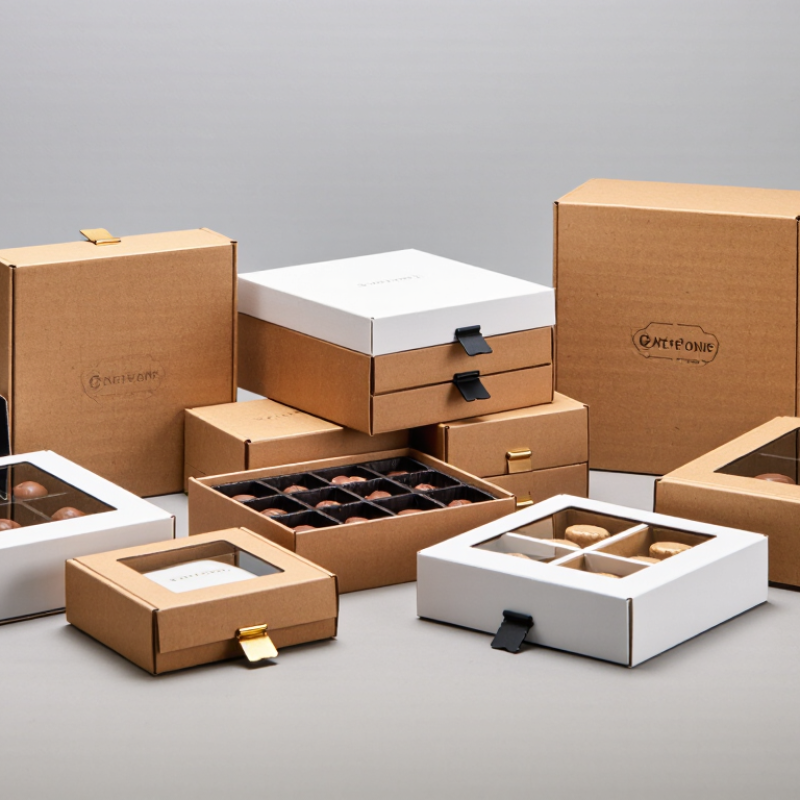
Types of Cardboard Boxes Suitable for Wholesale Chocolate Packaging
Choosing the right cardboard box depends on chocolate shape, shipping distance, and presentation goals. Folding cartons suit affordable wholesale orders and flat storage. They work well for bars, truffles, and small assortments. Rigid setup boxes offer stronger protection and a premium feel. Their firm walls reduce crushing during stacking, but they require more warehouse space.
Corrugated mailer boxes are practical for e-commerce shipments. Their fluted layer absorbs handling shocks better than thin carton stock. Kraft cardboard creates a natural appearance, while coated board supports sharper colors and smoother graphics. Window boxes help customers view the chocolates without opening the package. However, the window must fit tightly to limit dust and moisture exposure. Chocolate packaging should use food-contact-safe materials, clean adhesives, and inserts that prevent movement.
Tips:
Match the box size closely to the product. Empty space increases breakage. Test samples under real shipping conditions before ordering in bulk. Check folding quality, corner strength, odor, and closure security. I once selected an attractive carton that was slightly too loose. The chocolates shifted during delivery. It looked fine on a sample table, but failed in transit. That mistake showed me that appearance cannot replace practical testing. Wholesale buyers should also compare packing speed, pallet efficiency, and storage conditions before choosing a box type.
Key Materials and Food-Safety Standards for Chocolate Boxes
For chocolate wholesale, a cardboard box must protect more than appearance. It must resist compression, moisture, grease, and temperature changes during storage and delivery. The Food and Agriculture Organization reports that about 13% of food is lost between harvest and retail. Packaging cannot solve every loss, but a stable box can reduce crushing and contamination risks.
Choose virgin or responsibly sourced food-contact paperboard with a smooth, low-odor surface. Recycled fiber may be suitable, but suppliers should provide migration testing and chemical compliance documents. In the United States, check relevant FDA food-contact requirements, including 21 CFR 176.170. In Europe, confirm compliance with Regulation (EC) No. 1935/2004 and Good Manufacturing Practice rules. The European Commission also emphasizes traceability across food-contact materials. That detail is often overlooked.
Tips: Specify board thickness, moisture resistance, and maximum stacking weight. Ask for a declaration of compliance, test reports, and ink details. Keep chocolate away from direct ink contact unless the structure includes a verified food-safe barrier. Test a packed sample for 24 to 48 hours under realistic warehouse conditions. Real experience matters here. A box that looks rigid may still buckle after humidity exposure. I would also avoid assuming “recycled” automatically means safer or greener; the actual process, barrier, and recovery system require review.
Top 10 Cardboard Boxes for Chocolate Wholesale
Typical paperboard caliper by box format and material
Thicker board generally provides better stacking strength and product protection, while coated or laminated food-contact paperboard helps resist grease, moisture, aroma migration, and chocolate fat transfer. Typical material choices include folding boxboard, solid bleached sulfate, kraft board, corrugated E-flute, rigid paperboard, grease-resistant board, and foil-laminated paperboard. For food packaging, suppliers should verify compliance with applicable requirements such as EU Regulation (EC) No. 1935/2004, EU GMP Regulation (EC) No. 2023/2006, FDA 21 CFR 176.170 and 21 CFR 176.180, together with migration testing and declarations of compliance where required. Caliper values shown are representative wholesale packaging specifications, not legal limits.
Top 10 Cardboard Box Designs for Wholesale Chocolates
Wholesale chocolate packaging must protect appearance, aroma, and handling efficiency. The top ten cardboard box designs offer different commercial advantages. A tuck-end carton suits everyday bars and lowers assembly time. A reverse-tuck carton supports fast retail packing. A sleeve-and-tray box adds a refined unboxing moment. A drawer box creates a premium presentation. A two-piece lid-and-base box feels sturdy and reusable. A folding window carton helps customers inspect color and decoration. A partitioned assortment box prevents pralines from touching. A gable box suits seasonal gift collections. A hexagonal box creates strong shelf distinction. A rigid setup box provides the highest perceived value, but it usually costs more storage space.
According to Grand View Research, the global paper packaging market reached about US$427 billion in 2023. This scale supports broad material availability and competitive wholesale pricing. A 2023 McKinsey packaging survey also found that consumers increasingly value recyclable paper-based formats. However, recyclability depends on coatings, adhesives, inks, and local facilities. A glossy window may improve sales, yet it can complicate recycling. I would not overtrust appearance alone. For bulk orders, test compression with filled boxes before approving production. Check corner crushing, insert movement, and moisture resistance. Chocolate needs a clean, dry interior. Kraft board works well for natural positioning, while coated white board delivers sharper color. Small details matter: a 3-millimeter divider shift can damage delicate pieces during transport. The most practical design is not always the most beautiful.
How to Compare Size, Protection, Customization, and Cost
Top 10 Cardboard Boxes for Chocolates Wholesale?
How to Compare Size, Protection, Customization, and Cost
When comparing ten cardboard box styles, measure the inner space, not the outside dimensions. Chocolate pieces need room for inserts, wrappers, and minor production differences. Fit comes first. A snug insert reduces movement and surface scratches during delivery. Leave enough clearance for tall truffles, layered assortments, or delicate decorations. Flat bars often need wider compartments and stronger dividers. Test real samples instead of trusting catalog images.
Protection matters. Compare paperboard thickness, corrugated structure, corner strength, and closure security. Ask suppliers for compression data and sample shipments. Humidity can weaken cardboard, especially during long storage. A folding carton may cost less, while a rigid box can offer better stacking performance. However, the cheapest structure is not always the most economical choice. Damaged chocolates create hidden costs.
Customization affects both appearance and labor. Consider printed sleeves, die-cut inserts, windows, foil details, and easy-open tabs. Each feature can increase tooling, assembly time, and minimum order quantities. Use the cost per packed unit, not the box price alone. Include freight, storage, setup fees, and rejected units.
I once selected a cheaper box and underestimated hand-packing time. The savings disappeared quickly. Request a small trial run before approving thousands of units. It may expose weaknesses early.
Selecting the Best Chocolate Box for Different Wholesale Needs
Choosing a chocolate box for wholesale begins with the product, not the print design.
A small truffle range needs snug partitions and a firm insert. Larger bars need wider walls and crush-resistant corners. In my packaging tests, a box that looked strong often bent after stacking ten high. That detail matters during warehouse handling. Short-distance orders may suit single-wall cardboard. Long transport needs thicker board, edge protection, and a secure closure. Chocolate also dislikes heat, moisture, and careless movement.
For gifting, choose rigid-looking folding cartons with clean surfaces and space for a sleeve or label.
For everyday retail, lightweight tuck boxes reduce storage volume and assembly time. Seasonal assortments benefit from removable dividers. They let staff change layouts without replacing the whole carton. Bulk club packs need efficient dimensions, stable pallets, and easy opening. Custom inserts protect delicate pieces, but they can raise labor and material costs. Do not assume the most elaborate box sells best. Sometimes it slows packing.
Before ordering, request samples and test them with your actual chocolate sizes.
Check lid friction, odor transfer, print rub, and corner strength. Measure filled boxes after refrigeration and room-temperature rest. This small test can expose poor fit. Ask the supplier for board grade, food-contact documentation, recycled content, and moisture guidance. Reliable sourcing includes batch consistency and clear replacement procedures.
I still find one weakness: visual appeal is easy to judge, but packing speed is often guessed. Time both. A beautiful carton that takes twice as long may weaken wholesale margins.
Conclusion
Choosing the right Cardboard Boxes For Chocolates is essential for protecting product quality, presenting a professional image, and controlling wholesale packaging costs. This guide explores suitable box types, including folding cartons, rigid boxes, window boxes, insert boxes, and recyclable kraft designs. It also explains important material considerations, such as food-safe paperboard, non-toxic inks, moisture resistance, and reliable structural strength to help keep chocolates clean, secure, and visually appealing during storage and transportation.
The article presents ten practical box designs for different chocolate products and compares them by size, protection, customization options, sustainability, and overall cost. Whether the priority is elegant presentation, efficient shipping, gift-ready packaging, or large-volume distribution, buyers can use these criteria to select the most suitable solution. By matching box style and material to product size, quantity, handling conditions, and target market, wholesalers can achieve a balance between attractive branding, dependable protection, and cost-effective packaging.

 Momei Printing