China Top Drawer Paper Box Manufacturers for Global Buyers

Time:2026-09-28 Author:Liam
0%

Global buyers are paying closer attention to packaging materials, presentation, and supply reliability. FAO’s 2022 forest-products statistics place worldwide paper and paperboard production at roughly 400 million tonnes. That scale matters: buyers need to compare material specifications, not just catalogue photos. A Drawer Paper Box should slide smoothly, protect its contents, and arrive with consistent color and finish. Small details count. A drawer that catches can undermine an otherwise polished product.

China’s manufacturers offer a wide range of formats, from rigid gift boxes to compact retail packaging. Yet capabilities vary. Ask for board thickness, paper weight, insert options, print tolerances, sample lead time, and production capacity in writing. Request a physical pre-production sample, especially when the box must fit a specific product. Check how the supplier handles quality inspections and export packing. Those answers reveal more than a low unit price.

Market growth is another reason to assess suppliers carefully. Smithers’ research on global packaging points to continued demand across packaging markets, though forecasts differ by material and application. Treat broad market projections as context, not proof that one factory is suitable. A strong sourcing decision depends on measurable specifications, clear communication, and repeatable quality checks. No supplier is perfect. Even careful specifications can miss a real-world issue, such as a tight drawer after transit. That is worth testing before a large order.
China Top Drawer Paper Box Manufacturers for Global Buyers

Understanding Drawer Paper Boxes and Their Global Applications

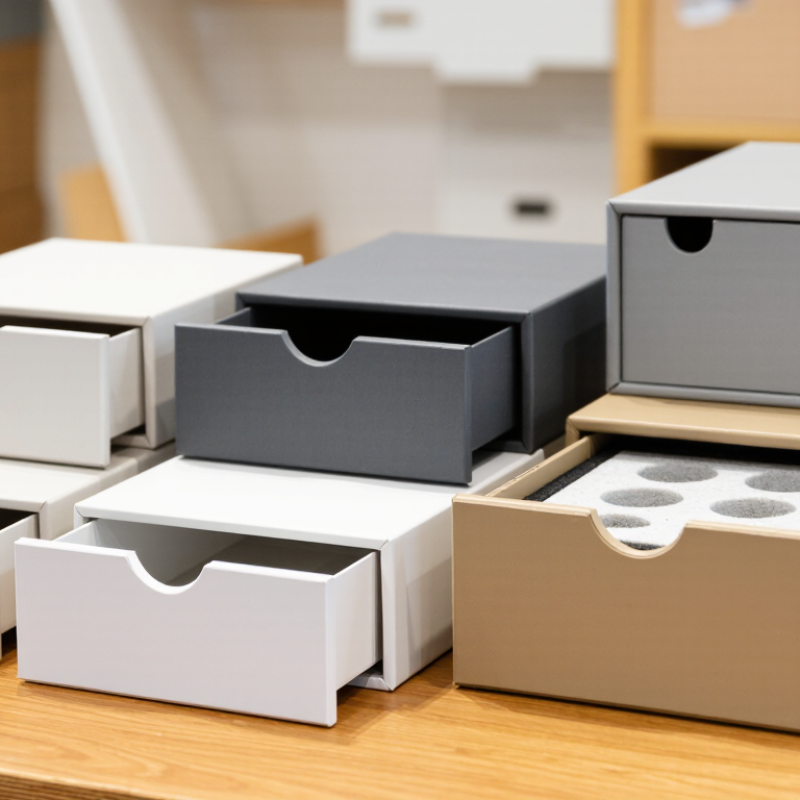
Drawer paper boxes combine a paperboard sleeve with an inner tray that slides outward. The structure keeps small items aligned and creates a clear opening experience. A thumb notch, ribbon pull, or shallow finger cut can make access easier, especially when the box is compact. In practice, tray friction matters: too tight, and customers tug; too loose, and products shift during handling. For jewelry, stationery, cosmetics, tea accessories, and small electronics, this format can protect presentation while limiting bulky inserts.

Across export markets, drawer boxes are used for retail packaging, gift sets, sample kits, and e-commerce orders. Their flat panels offer space for product information, but printing and coatings should suit the intended use. A glossy finish may resist scuffs, yet laminated surfaces can complicate recycling where local facilities cannot separate materials. This varies by region. Buyers should check board strength, dimensions, packing methods, and transport conditions with suppliers, then test a filled sample before approving production. A box that works on a desk may buckle after a long, humid shipment. The format is useful, not universal. Sometimes a simpler folding carton is the better choice, and that deserves a second look.

How Chinese Manufacturers Design and Produce Drawer Paper Boxes

Designing a drawer paper box starts with its movement. The inner tray must slide smoothly without feeling loose, while the outer sleeve protects its edges. Manufacturers select paperboard thickness according to box size, product weight, and shipping conditions. They then cut and crease the board, wrap it with printed paper, and assemble the sleeve and tray with adhesive. Small details matter. A few millimeters can change the fit. Prototypes are tested by repeated opening, closing, and checking corners for dents or lifted paper. Not every sample passes.

Material choices affect the next stage, too. Eurostat reports that 83.2% of paper and cardboard packaging waste in the EU was recycled in 2022. This figure covers packaging broadly, not drawer boxes specifically, but it shows why simpler, paper-based constructions deserve consideration. Foil laminates, plastic windows, and mixed-material fittings may complicate sorting. Quality checks should also cover print alignment, glue placement, tray pull, and surface scuffing. A box can look excellent under studio lights yet arrive marked after transport. That gap is easy to underestimate. Reliable production depends on clear samples, measured tolerances, and checks across multiple units, not just one hand-finished prototype.

Key Criteria for Evaluating Chinese Drawer Paper Box Manufacturers

A reliable drawer paper box manufacturer should explain its board grade, paper thickness, and construction method. Ask whether the outer wrap and inner tray use the same stock; different materials can affect fit and feel. Request a physical sample. The drawer should open smoothly without wobbling, and the corners should stay sharp after repeated handling. Small flaws matter. Check print alignment, glue marks, and whether edges lift after light rubbing. A sample is useful, but it cannot guarantee every production run will match.

Tips: Send the supplier your box dimensions, product weight, and artwork files. Ask for a written sample approval, production timeline, and inspection plan. Keep one approved sample for comparison.

Assess communication as carefully as price. Clear answers about tolerances, order quantities, and delivery dates make planning easier. Ask how the manufacturer checks dimensions and print quality during production, not only before shipping. If possible, review recent sample photos alongside the physical box. Also ask about paper sourcing and any relevant quality records, then verify claims rather than relying on broad promises. Low prices can be appealing, but thin board may dent during transit. There is a trade-off here, and it is easy to overlook when comparing quotes. A practical evaluation considers fit, durability, and consistent workmanship together.

China Top Drawer Paper Box Manufacturers for Global Buyers - Key Criteria for Evaluating Chinese Drawer Paper Box Manufacturers

Evaluation Criterion What to Check Practical Evaluation Approach Useful Evidence to Request
Box structure and fit Drawer movement, sleeve fit, opening clearance, corner construction, and whether the box protects the product in transit. Provide the product dimensions and intended use. Review a physical sample with the actual product or a dimensionally accurate dummy. Dimensioned dieline, structural drawing, sample, and agreed dimensional tolerances.
Paperboard specification Board type, grammage, thickness, recycled or virgin fiber content, and suitability for the box size and load. Compare samples against a written specification. Confirm that the selected board supports the product without excessive bending or drawer friction. Material specification, board supplier documentation, and sample or test results for the proposed construction.
Printing and color control Color consistency, registration, fine-detail reproduction, coating or lamination, and resistance to scuffing. Approve a production-representative proof or sample under agreed viewing conditions. Specify color references and acceptable variation in the purchase specification. Signed artwork proof, color reference, print sample, and documented inspection criteria.
Finishing and assembly quality Foil stamping, embossing, debossing, window placement, adhesive bonding, clean edges, and consistent assembly. Inspect samples for alignment, lifting, glue marks, sharp edges, and smooth drawer operation. Check that decorative finishes do not interfere with fit. Approved pre-production sample, process checklist, and defect classification agreed before production.
Quality management Documented procedures for incoming materials, in-process checks, finished goods inspection, and corrective actions. Ask how defects are recorded and resolved, and whether production batches can be traced to inspection records. Treat certification as supporting evidence, not a substitute for product checks. Relevant quality-system certificate, inspection records, sample inspection report, and corrective-action procedure.
Sampling and acceptance plan Pre-production approval, inspection timing, sampling method, and clear definitions of critical, major, and minor defects. Agree on the inspection standard and acceptance limits in the contract or purchase order. AQL values, when used, should be explicitly agreed rather than assumed. Approved reference sample, written inspection plan, defect criteria, and batch-release records.
Packaging performance Protection from crushing, drops, vibration, abrasion, and moisture exposure relevant to the product and shipping route. Test the complete packed configuration when transit performance is important. Select methods based on the distribution risks; ISTA procedures and ASTM methods may be relevant. Packaging test plan, test reports for the agreed configuration, and photos of packed samples.
Material sourcing and claims Traceability of paper claims, recycled-content statements, and any responsibly sourced material claims. Verify claims against current documentation and the intended product scope. FSC certification, where claimed, should be checked for valid scope and chain-of-custody details. Current certificates or supplier declarations, supporting transaction documents where applicable, and approved on-pack claim wording.
Regulatory suitability Requirements that apply to the destination market and intended use, including any restricted substances or food-contact requirements. Identify destination countries and end use before ordering. If packaging is intended for food contact, confirm the applicable rules and obtain appropriate compliance evidence for the specific materials. Material declarations, relevant test reports, and a written statement identifying the regulations addressed.
Production capacity and delivery planning Ability to manage the required order volume, production schedule, peak demand, and export packing arrangements. Request a schedule covering sampling, approval, production, inspection, and dispatch. Confirm how changes or delays are communicated; lead times depend on order details and capacity. Written production schedule, capacity confirmation for the order, and agreed shipment milestones.
Cost transparency Unit price assumptions, tooling or setup charges, sample fees, packing costs, and any charges affected by quantity or specification changes. Compare quotations on the same dimensions, materials, finish, packing method, order quantity, and delivery terms. Clarify the validity period and change-order process. Itemized quotation, specification sheet, tooling details, and written confirmation of delivery terms.
Communication and documentation Responsiveness, clarity on technical questions, revision control, and consistency between approved artwork, samples, and production files. Use a single controlled specification and approval record. Confirm who signs off artwork, samples, and any changes before mass production. Revision-controlled artwork, meeting or approval records, final specification, and named project contacts.

Note: Requirements and acceptance limits should be set for the specific product, order, destination market, and shipping method. Certification or test reports should be checked for validity, scope, and relevance to the proposed packaging.

Comparing Manufacturer Capabilities, Materials, and Customization Options

Drawer paper boxes differ in how smoothly they open, how well they protect products, and how consistently they arrive. Buyers should compare more than catalogue photos. Ask manufacturers about board thickness, drawer fit, adhesive placement, and production checks. A sample reveals details that drawings can miss, such as a loose inner tray or a rough paper edge.

Material choice affects both appearance and performance. Greyboard provides structure, while coated or textured paper changes the finish and feel. Recycled-content options may suit a sustainability brief, but confirm the exact grade and surface quality. Customization can include dimensions, inserts, ribbons, printing, and foil details. Small details matter. A tight insert can prevent movement, though overly snug sizing may make products difficult to remove. Request a physical sample using the intended materials, then check it under ordinary handling and packing conditions.

Manufacturer capabilities also vary in sampling support, color control, and order flexibility. Share product measurements, target quantities, and artwork requirements early. Ask how changes are approved before production. This reduces avoidable surprises, though no checklist catches everything. Some specifications may need revision after testing, and that is worth acknowledging. Clear communication and documented sample approval give global buyers a more reliable basis for comparison.

Typical Paperboard Basis-Weight Ranges for Drawer Boxes

Indicative commercial ranges in grams per square metre (gsm), by material type.

Basis weight is one factor in choosing box material; stiffness, finish, structure, and intended load also matter. Ranges are indicative, not universal specifications, and vary by grade and supplier.

Sourcing, Quality Control, and Shipping for Global Buyers

Global buyers should define the drawer box before comparing quotes. Share finished dimensions, paper weight, board thickness, surface finish, and expected order quantity. Specify how the box should open and whether an insert must hold a particular product securely. Clear details make supplier comparisons more useful. Small details matter.

Request a physical sample made with the proposed materials. Check drawer movement, corner alignment, print color, and whether the outer sleeve keeps its shape. A sample can reveal problems that drawings miss. During production, agree on inspection points, such as material checks before printing and measurements on finished boxes. Record defects with dated photos and written notes. A checklist helps, but it cannot replace careful review; inspection plans also need to reflect the buyer’s actual risks.

Shipping plans deserve equal attention. Confirm the carton count, packed dimensions, gross weight, and pallet requirements before booking freight. Ask how boxes will be protected from moisture, crushing, and abrasion during transit. For sea shipments, allow time for production, inspection, port handling, and possible delays. Keep records. One common oversight is approving the box but not the shipping carton, which may change freight costs or arrive damaged. Recheck both before dispatch.

FAQS

What is a drawer paper box?

It has an outer paperboard sleeve and a sliding inner tray. A thumb notch or ribbon can make opening easier.

What products suit this box style?

It can hold jewelry, stationery, cosmetics, tea accessories, and small electronics. The tray helps keep small items aligned.

How can I check whether the drawer fits properly?

Open and close a physical sample several times. It should slide smoothly without wobbling or letting products shift. Fit matters.

What details should I share when requesting a quote?

Provide finished dimensions, product weight, board thickness, paper weight, finish, artwork, and expected quantity. Specify any insert requirements too.

What should I inspect on a sample?

Check corner alignment, print color, glue marks, and lifted edges. Rub the surface lightly and see if the sleeve keeps its shape.

Do glossy or laminated finishes suit every order?

Not always. They may resist scuffs, but some recycling facilities cannot separate laminated materials. Check local options before choosing.

How can buyers monitor production quality?

Agree on inspection points before production starts. Check materials, dimensions, printing, and finished boxes. Keep dated photos and notes.

What shipping details should I confirm?

Confirm carton count, packed dimensions, gross weight, and pallet needs. Ask how cartons will resist moisture, crushing, and abrasion. Check the shipping carton too.

Is the lowest quote always the best choice?

No. Thin board may dent during transit, while stronger materials can raise costs. I might overfocus on price unless I compare samples and delivery plans.

Conclusion

Drawer Paper Box packaging combines a sliding inner tray with a protective outer sleeve, offering an attractive and practical way to present, store, and ship products. Chinese manufacturers serve a wide range of global applications by adapting box dimensions, structural designs, paperboard grades, finishes, inserts, and printing to each project’s requirements. Their production process typically includes design development, material selection, sampling, printing, forming, assembly, and inspection.

When evaluating suppliers, buyers can compare manufacturing capacity, material options, customization capabilities, communication, quality-control procedures, and experience with export orders. Clear specifications and approved samples help align expectations for appearance, durability, and fit. Buyers should also confirm production schedules, packaging methods, shipping arrangements, and inspection standards before placing an order. Careful sourcing and consistent quality checks can help ensure that each Drawer Paper Box arrives in good condition and meets the intended presentation and packaging needs.

Liam

Liam

Liam is a dedicated marketing professional with a profound expertise in the industry, where he excels at highlighting the unique advantages of our core products. With a keen understanding of market trends and consumer needs, Liam frequently updates our company’s professional blog, providing......